By Peek Hames – Originally published in the 2010 Founder’s Review
Imagine diving into a local river and placing your hand on an old longleaf pine or cypress log that was living and growing when Columbus came to America. “The excitement of finding that log is unbelievable,” says John Claytor, a diver of Florida’s rivers since 1965. John became interested in exploring the rivers and lakes for artifacts while still in school at LWHS. Ken Johnson, who owned Johnson’s Beach in Ocklawaha, showed him some bottles he had found in the river, and John’s future was set. When not working for the Perrys on their farm in Belleview, he was diving in the Ocklawaha River looking for treasures. And find them he did. He found so many arrowheads, bottles, and fossils that he teamed up with a well-known Marion County diver, Ben Waller, and opened the Earth Science Shop in Belleview for a few years. They contributed hundreds of artifacts to the State of Florida Museum in Tallahassee and the University of Florida Museum in Gainesville.
It took about 75 years for the logging companies to turn the South’s virgin longleaf pine forest into fields of stumps. In the mid-1800s, the logging companies began moving south, clearing large tracts of hardwood and, in the swamps, cutting giant cypress trees. After that, it was sawmills cutting small tracts of pine, some on family plots too small for the big companies. Later, many of the old lighter knot stumps were harvested for their source of fuel. In the fifties, you could see many a railcar pass through Belleview loaded with the stumps. The stumps contained a compound used in the making of explosives, and as kids, we would say, “There goes another load of dynamite.” Today, in some of our swamps, you can still find a few of the old cypress stumps as a reminder of the early loggers.

The logging companies would set up a mill town with all the facilities to support the mill operation and the workers. They didn’t want to own the land and only bought large tracts of timber. A mill town usually lasted until all the hardwood had been harvested in that area, usually about 20 years. By 1920, most of the mills had cut out and got out, and by 1930, most were gone, leaving behind deserted homes and businesses. The director of The Southern Forest Experiment Station said in 1923: “In county after county across the southeast, the piney woods have passed away. The villages are nameless towns, their monuments piles of sawdust. Their epitaph, the mill has cut out.”
The early sawmills were set up near rivers or ponds. Many of the old logs were pulled to the river, tied together, and floated down to the mills by workers in small boats or tied together with wire and chains in rafts of 100 logs or more. When a log became waterlogged or was just too large to float, it had to be cut loose to keep the boat from sinking or causing the sinking of other logs. These sinker logs were called deadheads. When possible, the company contracted salvagers to retrieve the logs. But many of them were lost in the muddy bottoms or were just too large to retrieve and were left in our rivers for 150 years or more. The old-growth cypress trees had to be girdled (a ring cut around the tree) and left standing for a year so they could dry out enough to float. Still, many of these giants sank.

While diving in rivers and lakes throughout Florida, John came across hundreds of century-old “deadheads.” He bought some property on the Suwannee River and began pulling them from the river. John said, “The bark would still be on the pine, and when you would pull it away, there would be this beautiful yellow hardwood.” The market was good for the hardwood pine, and John set up a small mill operation. Today, it is his full-time business, as he has some of the prettiest hardwood available anywhere. He also has retrieved many of the giant cypress logs that were lost. Besides his mill on the Suwannee, John also has many of the old logs at his home, just west of Belleview, where he saws and sells them. John has more miles of rivers permitted to retrieve the old logs than anyone in Florida and has found cypress trees over 600 years old. One documented tree was sold to a buyer who called it the “Columbus Tree” because it was growing when Columbus sailed to America.
When asked about the gators and snakes, he replied, “I’m aware of the gators and give them room, especially in mating season and when baby gators are around. I was bitten by a cottonmouth three years ago. I was tying up a log, and he was in a hole in it and got me in the hand. My hand was pretty nasty for a while. When you have spent over 10,000 hours underwater, you can’t let it bother you.”
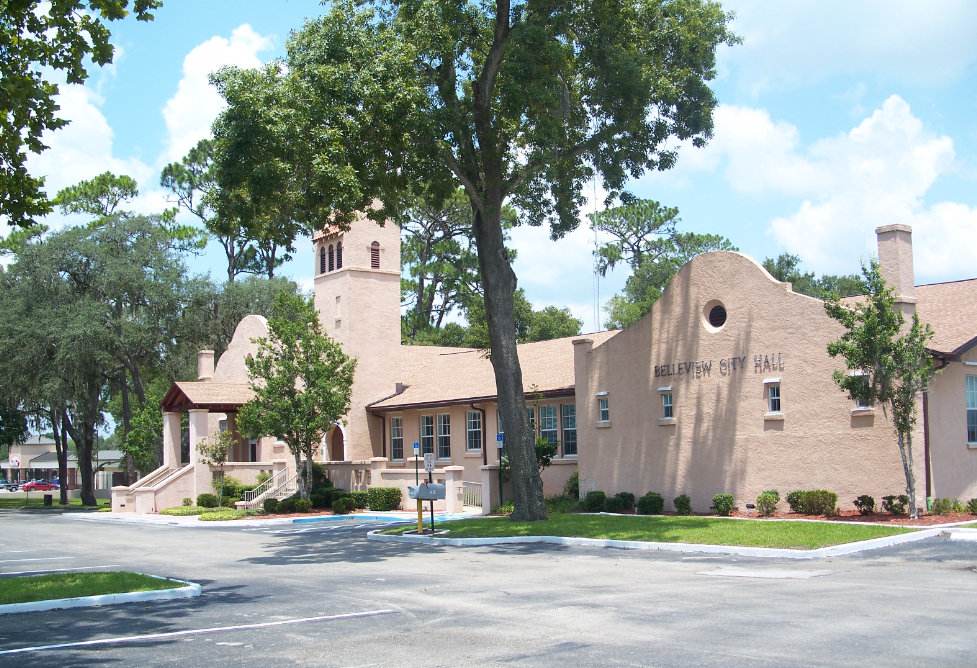
The most common sinker logs John finds are old-growth longleaf pine, heart cypress, and pecky cypress. All these species were the most sought after by the early loggers and are basically extinct, save for a handful of the bald cypress and a few thousand acres of longleaf in the southern U.S. In the mid-1800s, the longleaf pine forest covered over 60 million acres. Some were over 300 years old. In the swamps, you could find cypress trees from 500 to 1700 years old. Today, there are only 2,000 acres of longleaf pine left and just a handful of bald cypress. You can only find a longleaf pine tree scattered here and there anymore. Belleview is lucky, as there is a nice stand of the trees spared from the lumberman’s ax at City Hall.

The old logs today are sought after by those wanting to have beauty and history built into their homes. Today, through preservation, technology, determination, and a love for the old trees, John and precision floor crafter Mike Warwick have developed a process to craft and mold these logs into historical renovations, furniture, and hardwood flooring. They are at the forefront of the deadhead logging industry by selling End Grain flooring. A technique of sawing the ends of pre-harvested river logs, when installed as flooring, looks as though you are walking on the ends of century-old logs. Mike has a custom floor gallery on US 441 between Belleview and the Villages. With the new style flooring and tight-grained century-old pre-harvested logs, they are preserving our forest, providing a higher grade of lumber, and keeping the early logging industry alive for generations to come.