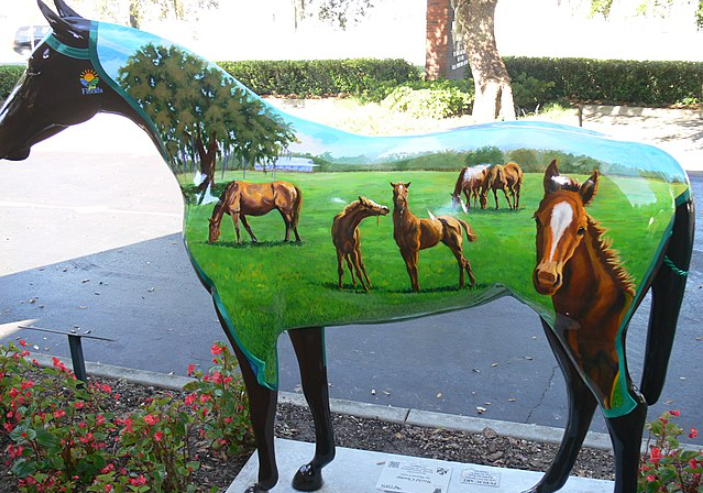
You’re standing at the edge of a quiet pasture just off State Road 40. The wind is still. The sun leans heavy behind the trees. A few thoroughbreds shuffle in the grass, flicking their tails at nothing in particular. It’s peaceful. Almost timeless.
But don’t blink. Because just beyond that fence line, the world is moving in—one moving truck at a time. Ocala has once again clinched U-Haul’s title as the No. 1 Growth City in the United States for 2024. That makes three straight years in the top two, a streak that suggests this town, once known more for stallions than subdivisions, has become the hottest ticket in Florida real estate. U-Haul data shows 53.7% of moves were inbound—up 5% from last year—while outbound traffic remained mostly steady. Translation? They’re coming, and they’re not slowing down.
But if you ask those who’ve been here a while, not everyone’s cheering.
This is Marion County. Horse country. A place built on the rhythm of hooves, not the screech of brakes in morning traffic. Where the economy wasn’t always booming, but the skyline was open, the nights were quiet, and the only crowd you worried about was at the feed store on Saturday morning.
Ocala’s rise to equestrian fame began not with a bang, but with the arrival of Carl G. Rose in the 1940s. An Indiana engineer turned Florida dreamer, Rose bought 1,000 acres of wild land and dared to believe that thoroughbreds could thrive here. He was right. His farm, Rosemere, birthed champions. Gornil, one of his early horses, won at Tropical Park in 1944 and proved that Florida dirt could yield gold.
Then came farms like Tartan, Ocala Stud, and Live Oak. They didn’t just raise horses—they raised expectations. And by the time Needles won the Kentucky Derby in 1956, the industry had momentum. Affirmed, who trained here, captured the Triple Crown in 1978 and etched Ocala permanently onto the national map.
What followed was an ecosystem: over 1,200 horse farms, training centers, veterinary clinics, auction houses, and world-class facilities. The Ocala Breeders’ Sales Company became a beacon, attracting international buyers and turning quiet Marion County into a global hub of thoroughbred commerce. The region became known not for tourism or theme parks, but for something purer: excellence forged through repetition, risk, and respect for the land.
That legacy is still here. But you might have to squint to see it.
These days, the view from a hilltop pasture may include more than just grazing colts. You might spot cranes, condos, and cookie-cutter subdivisions stretching into what used to be cow fields. New homes promise granite countertops and vinyl privacy fences. The brochures say “country living,” but longtime residents know better.
They remember when traffic on Pine Avenue meant waiting behind a tractor. When a stoplight at 60th Avenue was a novelty. When the horizon wasn’t blocked by three-story storage units and RV dealerships.
Commuters sit bumper-to-bumper on roads that weren’t built for this many people. Home prices are rising fast enough to push young families and retirees into surrounding towns. Schools are straining. Infrastructure groans. And those pastures—those wide, open, whisper-quiet fields—are being eyed by developers with blueprints in their briefcases and dollar signs in their eyes.
It raises a question that doesn’t have a neat answer: How much growth is too much?
Florida as a whole is no stranger to influx. Kissimmee, Clermont, Port St. Lucie, Panama City—five Florida cities made U-Haul’s Top 25 Growth Cities list. But Ocala’s ascent is unique. It was never meant to be a metroplex. It was a pocket of preservation. A sanctuary for horses, heritage, and a slower pace of life.
Some call it progress. Others call it a loss.
There’s a bitterness among longtime residents that doesn’t always make it into the headlines. It shows up in zoning meetings and letters to the editor. In conversations at gas stations and feed stores. In the way a farmer watches surveyors drive stakes into what used to be his grandfather’s hayfield.
They don’t hate newcomers. They just miss the version of Ocala they grew up with. And they worry that once this land is paved, it’s gone for good.
And if you find yourself driving along County Road 329 at dusk, you might still catch a glimpse of what once was. A silhouette of a filly trotting past a weathered barn. A teenager mucking stalls under the amber glow of barn lights. The distant sound of hooves echoing through a valley that, for now, remains untouched.
But look closer, and you might see something else: a surveyor’s truck idling nearby. A for-sale sign leaning against the fence. A future that hasn’t arrived yet—but is very much on its way.
Because this is Ocala, 2025. Horse capital, yes. But also a city under construction. A place where past and future are running neck-and-neck—and no one’s quite sure which will cross the finish line first.